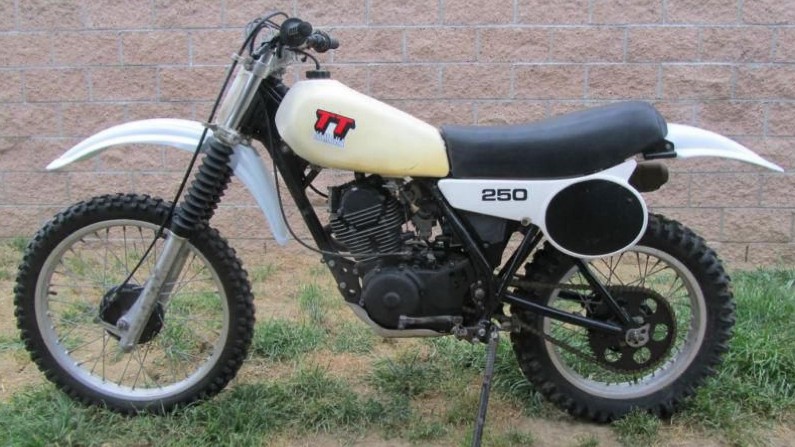
Specifications and workshop reference information for the 1980 Yamaha TT250, including engine, chassis, service data and setup details.
Note: Specs are compiled from factory data, manuals and owner feedback. Bikes vary — if yours is different, jump into the forum and share it.
| Manufacturer | Yamaha Motor Co., Ltd. |
| Model | TT250 |
| Year | 1980 |
| Motorcycle Type | Four-stroke off-road / enduro |
| Country of Origin | Japan |
| Engine Type | Air-cooled, four-stroke, single-cylinder, SOHC |
| Displacement | 249 cc |
| Bore | 75.0 mm |
| Stroke | 56.5 mm |
| Starting System | Kick start |
| Carburetion | Single carburettor | Replacement Options |
| Exhaust | Single exhaust system |
| Transmission | 5-speed manual |
| Clutch | Wet multi-plate |
| Final Drive | Chain |
| Drive Chain | 520 |
| Front Sprocket | 14 teeth |
| Rear Sprocket | 49 teeth |
| Frame | Tubular steel, single front downtube |
| Front Suspension | Telescopic forks | Fork Oil Levels |
| Rear Suspension | Monoshock with adjustable spring preload | Rear Suspension Setup |
| Front Brake | Drum |
| Rear Brake | Drum |
| Wheel Type | Wire-spoke |
| Front Tyre | 3.00-21 | Tyre Size Guide |
| Rear Tyre | 5.10-17 | Tyre Size Guide |
| Wheelbase | 1422 mm |
| Seat Height | 838 mm |
| Fuel Capacity | 7.6 litres |
| Weight | 108 kg |
| Electrical System | 6 volt |
| Spark Plug | NGK BP7ES |
By 1980, Yamaha had already built a formidable reputation in off-road competition. The YZ motocross range was well established, the IT series catered for serious enduro riders, and the mighty TT500 had demonstrated that a simple four-stroke could still be enormous fun in the dirt. Into that family came the 1980 Yamaha TT250, offering the TT idea in a lighter and considerably more manageable package.
At the heart of the TT250 was a 249 cc air-cooled four-stroke single. It wasn't intended to compete with Yamaha's explosive two-stroke motocross machinery. Instead, the engine delivered the tractable power, engine braking and relatively uncomplicated maintenance that made four-stroke trail bikes so appealing. A five-speed transmission and chain final drive completed a straightforward package suited to trails, fire roads and general off-road riding.
That simplicity remains one of the TT250's attractions to vintage owners today. There are no radiators, power valves or complicated electronic systems to worry about. A sound engine, correctly adjusted controls and properly sorted carburetion can make one a remarkably enjoyable old trail bike. After decades of storage and previous-owner modifications, checking the carburettor and replacement options is often worthwhile before chasing more mysterious running problems.
The chassis followed Yamaha's established off-road thinking of the period. Long-travel telescopic forks handled the front while Yamaha's monoshock arrangement took care of the rear. The single-shock design gave the TT a noticeably different appearance from the twin-shock trail bikes that had dominated only a few years earlier and reflected the rapid suspension development occurring through the late 1970s.
For a TT250 being returned to regular use, suspension condition matters enormously. Forty-plus-year-old fork oil, hardened seals and tired rear suspension can completely disguise how capable the original chassis was. Establishing a sensible starting point for vintage motorcycle fork oil levels and correctly setting the rear suspension sag and setup can transform the feel of a restored bike.
Drum brakes front and rear, wire-spoke wheels and conventional off-road tyres kept the rest of the machine simple and rugged. Owners resurrecting a long-stored TT should pay particular attention to wheel bearings, spokes, brake linings and the final drive. Chains that appear serviceable can have seized links, while sprockets often reveal decades of neglect. The VMXOwners motorcycle chains and sprockets guide can help when assessing or replacing the final-drive components.
Today the 1980 TT250 occupies an interesting place in Yamaha's off-road history. It doesn't have the intimidating reputation of the TT500 or the racing pedigree of a contemporary YZ, but that's part of its charm. It represents the practical side of the early four-stroke trail-bike era: relatively light, uncomplicated and designed to be ridden rather than admired from a distance.
For vintage enthusiasts wanting an early Yamaha four-stroke that can still be enjoyed on the trail, the original TT250 deserves considerably more attention than it often receives.
Discuss motocross bikes, restorations, tuning and riding.