
Specifications and workshop reference information for the 1979 Kawasaki KX250, including engine, chassis, service data and setup details.
Note: Specs are compiled from factory data, manuals and owner feedback. Bikes vary — if yours is different, jump into the forum and share it.
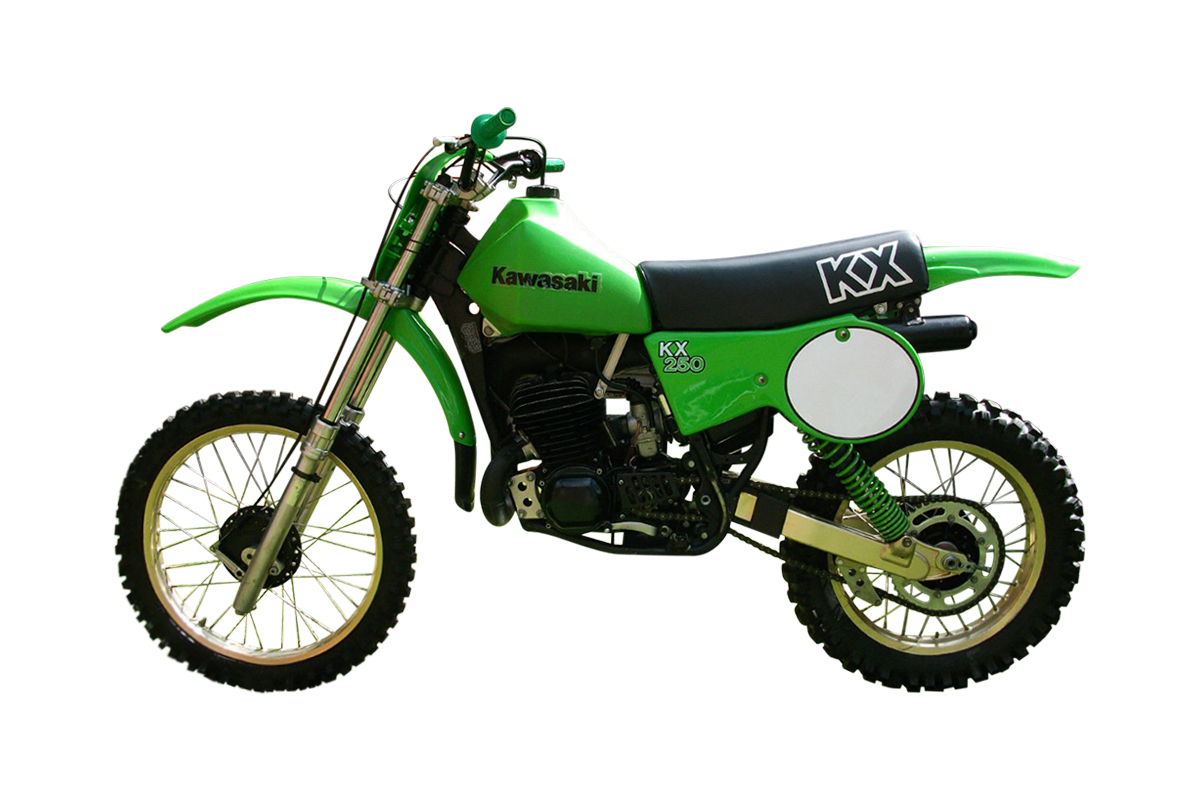
| Engine Type | 2-Stroke Reed Valve Single |
| Displacement | 249 cc |
| Bore × Stroke | 70.0 mm × 64.9 mm |
| Compression Ratio | 7.6:1 |
| Maximum Power | Not Published |
| Maximum Torque | Not Published |
| Carburetor | Mikuni VM36SS | Replacement Options |
| Lubrication | Premix |
| Fuel Mix Ratio | 25:1 | Premix Calculator |
| Ignition | Electronic CDI |
| Spark Plug | NGK BR8EG |
| Spark Plug Gap | Not Published |
| Transmission Type | 5-Speed |
| Clutch | Wet Multi-Plate |
| Primary Reduction | Not Published |
| Final Reduction | 13T / 47T |
| Overall Reduction | Not Published |
| Overall Length | 2120 mm |
| Overall Width | 940 mm |
| Overall Height | 1185 mm |
| Wheelbase | 1415 mm |
| Ground Clearance | 300 mm |
| Fuel Tank Capacity | 8.0 L |
| Bearing Sizes | Bearing Finder |
| Frame Type | Steel Single Cradle |
| Caster Angle | Not Published |
| Trail | Not Published |
| Front Suspension | Telescopic Forks | Fork Oil Levels |
| Rear Suspension | Twin Shock Swingarm |
| Front Suspension Travel | Not Published |
| Rear Suspension Travel | Not Published |
| Front Tire | 80/100-21 Tubed | Tyre Size Guide |
| Rear Tire | 110/100-18 Tubed | Tyre Size Guide |
| Front Brake | Drum |
| Rear Brake | Drum |
| Spark Plug | NGK BR8EG |
| Front Fork Oil (Left) | 274 cc |
| Front Fork Oil (Right) | 266 cc |
| Main Jet | 165-R |
| Chain Type | 520 |
| Chain Links | 114 |
| 1976 Kawasaki KX250 |
| 1977 Kawasaki KX250 |
| 1978 Kawasaki KX250 |
| 1980 Kawasaki KX250 |
| 1981 Kawasaki KX250 |
| 1982 Kawasaki KX250 |
| 1979 Honda CR250 |
| 1979 Yamaha YZ250 |
The 1979 Kawasaki KX250 arrived during one of the most competitive periods in motocross development. Japanese manufacturers were pushing rapidly toward lighter machines, longer suspension travel and increasingly specialised two-stroke engines. Kawasaki’s KX range was already firmly focused on competition, and the KX250 represented the company’s challenge to Honda, Yamaha and Suzuki in the fiercely contested 250cc class.
At its heart was Kawasaki’s 249cc single-cylinder two-stroke engine. Like most serious motocross machines of the period, the KX250 was designed around simplicity, strong performance and easy trackside maintenance rather than road-going convenience. Correct jetting remains particularly important on surviving bikes today, especially because modern fuels and riding conditions can differ considerably from those encountered when the motorcycle was new. Owners rebuilding or tuning the intake system can use the VMXOwners vintage motorcycle carburettor replacement and tuning reference when researching suitable components.
Chassis and suspension development was moving extraordinarily quickly by 1979. Only a few years earlier, relatively short-travel twin-shock machines had been normal. By the end of the decade, manufacturers were experimenting aggressively with suspension geometry, shock positioning and increased wheel travel. The KX250 belonged to this transitional generation, making an original or correctly restored example particularly interesting today. Suspension condition is critical on a vintage motocross bike, and owners working on the front end can refer to the VMXOwners motorcycle fork oil level and capacity guide when servicing period forks.
The KX250's conventional spoked wheels, knobby tyres and drum braking reflected contemporary motocross practice. Modern riders accustomed to disc brakes need to remember that a well-prepared drum brake can work surprisingly effectively, but worn linings, glazed drums, damaged cables and incorrect adjustment can transform braking performance. Wheel bearings, spokes and rims also deserve careful inspection on any machine that has survived more than four decades.
Another area commonly altered during a competition bike's life is the final drive. Different tracks, rider preferences and decades of previous ownership mean the sprockets fitted today may have little relationship to the original setup. Before replacing worn components, owners can compare options using the VMXOwners vintage motorcycle chain and sprocket guide.
Finding an untouched 1979 KX250 is becoming increasingly difficult. Motocross bikes were built to race, crashed regularly, repaired between meetings and modified as new technology became available. Plastics, handlebars, exhaust systems, suspension components and even complete engines could be replaced during their competitive lives.
That history is part of their appeal. A restored 1979 KX250 is more than an old dirt bike; it represents an era when motocross engineering was changing almost season by season. For today's owner, careful research before replacing original components can make the difference between simply getting an old Kawasaki running and preserving an authentic piece of late-1970s motocross history.
Discuss vintage motocross bikes, restorations, tuning and riding.