Specifications and workshop reference information for the 1978 Yamaha YZ80, including engine, chassis, service data and setup details.
Note: Specs are compiled from factory data, manuals and owner feedback. Bikes vary — if yours is different, jump into the forum and share it.
| Engine Type | Air-cooled, 2-stroke, single-cylinder |
| Displacement | 79 cc |
| Bore × Stroke | 47.0 × 45.0 mm |
| Compression Ratio | 6.8:1 |
| Maximum Power | Approx. 12 hp |
| Maximum Torque | |
| Carburetor | Mikuni | Replacement Options |
| Lubrication | Premix |
| Fuel Mix Ratio | 20:1 | Premix Calculator |
| Ignition | CDI |
| Spark Plug | NGK B8ES |
| Spark Plug Gap | 0.6–0.7 mm |
| Transmission Type | 5-speed manual |
| Clutch | Wet multi-plate |
| Final Reduction | Chain drive |
| Overall Length | 1,800 mm |
| Overall Width | 740 mm |
| Overall Height | 1,050 mm |
| Wheelbase | 1,230 mm |
| Ground Clearance | 260 mm |
| Fuel Tank Capacity | 5.0 L |
| Bearing Sizes | Bearing Finder |
| Frame Type | Steel single cradle |
| Front Suspension | Telescopic forks | Fork Oil Levels |
| Rear Suspension | Dual shock swingarm |
| Front Suspension Travel | |
| Rear Suspension Travel |
| Front Tire | 2.50-21 | Tyre Size Guide |
| Rear Tire | 3.00-18 | Tyre Size Guide |
| Front Brake | Drum brake |
| Rear Brake | Drum brake |
| 1973 Yamaha GTMX80 |
| 1979 Yamaha YZ80 |
| 1980 Kawasaki KDX80 |
| 1980 Yamaha YZ80 |
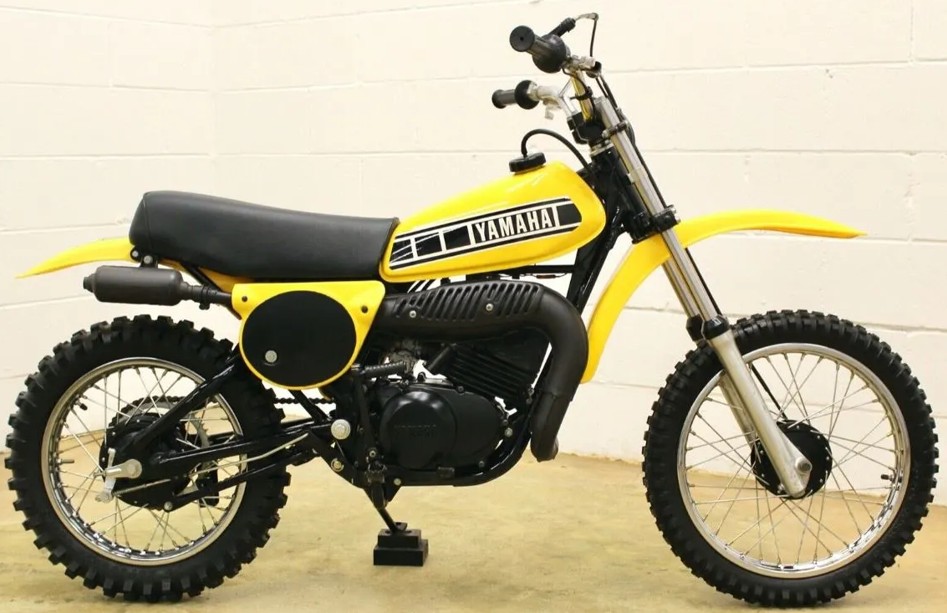
The 1978 Yamaha YZ80 represents an important period in junior motocross history. By the late 1970s, small-capacity competition bikes were no longer simply scaled-down trail machines. Young riders wanted motorcycles that looked and behaved like the full-size racers they watched on motocross tracks, and manufacturers were responding with increasingly serious machinery.
Yamaha's YZ range already had a strong competition identity, and the YZ80 brought that philosophy to younger riders. Its compact air-cooled two-stroke engine, lightweight chassis and motocross-focused design made it a genuine entry point into racing rather than merely a bike for riding around the backyard.
The little Yamaha's two-stroke engine rewarded correct setup. Like many competition motorcycles of the period, carburettor condition and jetting could make an enormous difference to starting, throttle response and overall performance. Nearly five decades later, surviving examples may have worn slides, changed jets or replacement carburettors fitted by previous owners. The VMXOwners carburettor reference and replacement guide provides a useful starting point when identifying and sorting an old fuel system.
Fuel and oil are equally important. The YZ80 comes from an era when riders became accustomed to mixing their own two-stroke fuel, and opinions about ratios could vary considerably. Modern oils are different from products available in 1978, but correct measurement remains essential. The two-stroke premix calculator makes it easy to calculate the required amount of oil for a chosen fuel quantity and ratio.
The chassis showed just how rapidly junior motocross machinery was developing. Conventional telescopic forks handled the front while Yamaha's Monoshock system took care of the rear. The single-shock arrangement gave the small YZ a family resemblance to Yamaha's larger competition bikes and distinguished it from the twin-shock layouts still common throughout the period.
For today's owner, suspension condition can matter more than cosmetic appearance if the bike is going to be ridden. Fork seals harden, internal components wear and fork oil can become badly contaminated. Checking the front end and using an appropriate fork oil specification and service reference is worthwhile before putting an old YZ80 back onto a track.
Final-drive components also deserve inspection. Junior motocross bikes often had hard lives, and sprockets were frequently changed to alter gearing for different tracks or riders. Rather than assuming the sprockets currently fitted are original, count the teeth and inspect both sprockets and chain together. The VMXOwners chains and sprockets reference can help when working through replacement options.
Today, an original 1978 YZ80 is more than an interesting little Yamaha. It represents the emergence of the serious junior motocross motorcycle — machines designed to teach young riders clutch control, gear selection, cornering and jumping on something that genuinely resembled a factory racer.
Many riders who later graduated to YZ125s, YZ250s and larger competition bikes began their motocross lives on machines like the YZ80.
That makes the 1978 model an important piece of Yamaha history: small in capacity, but significant in the development of generations of motocross riders.
Discuss vintage motocross bikes, restorations, tuning and riding.