
Specifications, manuals and workshop reference information.
Note: Specs are compiled from factory data, manuals and owner feedback. Bikes vary — if yours is different, jump into the forum and share it.
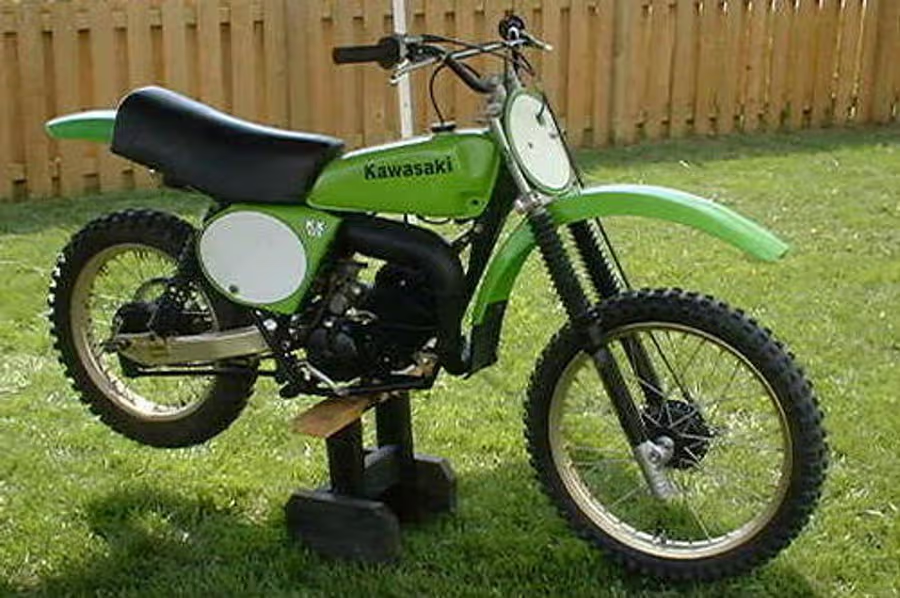
| Engine Type | 2-stroke single cylinder, rotary disc valve |
| Displacement | 124.8 cc |
| Bore × Stroke | 56.0 mm × 50.6 mm |
| Compression Ratio | 8.2 : 1 |
| Maximum Power | 19.75 hp @ 9500 rpm |
| Maximum Torque | 1.75 kg·m @ 9000 rpm |
| Carburetor | Mikuni VM26SC | Replacement Options |
| Lubrication | Petrol mix |
| Fuel Mix Ratio | 20 : 1 | Premix Calculator |
| Ignition | Magneto |
| Spark Plug | NGK B9EV |
| Spark Plug Gap | 0.6 mm |
| Transmission Type | 6-speed constant mesh |
| Clutch | Wet multi-disc |
| Primary Reduction | 3.14 (69/22) |
| Final Reduction | 4.61 (60/13) |
| Overall Reduction | 12.50 |
| Overall Length | 2020 mm |
| Overall Width | 875 mm |
| Overall Height | 1120 mm |
| Wheelbase | 1340 mm |
| Ground Clearance | 81 mm |
| Fuel Tank Capacity | 6.5 L |
| Bearing Sizes | Bearing Finder |
| Frame Type | Tubular single down tube |
| Caster Angle | 59° |
| Trail | 129.3 mm |
| Front Suspension | Telescopic fork | Fork Oil Levels |
| Rear Suspension | Swing arm dual shock |
| Front Suspension Travel | 160 mm |
| Rear Suspension Travel | 90 mm |
| Front Tire | 3.00-21 | Tyre Size Guide |
| Rear Tire | 4.10-18 | Tyre Size Guide |
| Front Brake | Drum 120 mm |
| Rear Brake | Drum 130 mm |
| 1974 Kawasaki KX125 |
| 1974 Yamaha YZ125 |
| 1975 Suzuki RM125M |
The 1973 Kawasaki KX125 represents an important stage in Kawasaki's development as a serious motocross manufacturer. During the early 1970s, motocross was changing rapidly as lightweight two stroke motorcycles began replacing heavier machines on race tracks around the world. Riders were looking for bikes that were lighter, easier to handle and capable of carrying speed through difficult terrain.
The 125cc class became one of the most competitive areas of motocross during this period. These smaller motorcycles required a different riding style, with riders relying on momentum, accurate gear selection and smooth throttle control. Kawasaki recognised the importance of this growing class and began developing motorcycles that would eventually lead to the highly successful KX range that became famous in later years.
The early KX125 showed the advantages of a compact two stroke engine. Unlike larger motorcycles that could rely on strong low-end torque, a 125 rewarded riders who kept the engine operating in its strongest power range. The lightweight design allowed riders to change direction quickly and maintain speed through corners, making these machines exciting to race and enjoyable to ride.
For vintage motocross enthusiasts today, restoring an early Kawasaki is about preserving the character and history of the motorcycle. Finding correct components, understanding original specifications and keeping the bike period-correct are all important parts of the restoration process. The VMXOwners vintage motocross parts finder can help owners researching components and information for classic machines.
The suspension technology of the early 1970s was still evolving as motocross tracks became faster and more demanding. Manufacturers were experimenting with improved fork designs, damping systems and suspension settings to give riders better control. Maintaining the correct setup is important for vintage bikes, and information about fork oil levels and suspension servicing can help owners keep their motorcycles performing as they were intended.
The engine systems on early two strokes also required careful attention. Carburettor tuning, fuel mixture and air filtration all played an important role in achieving reliable performance. Understanding the requirements of these classic engines through resources such as vintage motocross carburettor tuning information can assist riders during restoration and maintenance.
Although later Kawasaki KX125 models became legendary race machines, the early KX motorcycles helped establish the direction of Kawasaki motocross development. They represent a time when manufacturers were experimenting with new designs and riders were discovering the advantages of lightweight two stroke performance.
Today, the 1973 Kawasaki KX125 remains a significant motorcycle for collectors and vintage racers. It captures an era when motocross was evolving quickly and the foundations were being laid for the modern sport. Preserving these early machines allows enthusiasts to experience the technology, character and excitement of the motorcycles that helped shape motocross history.
Discuss vintage motocross bikes, restorations, tuning and riding.